
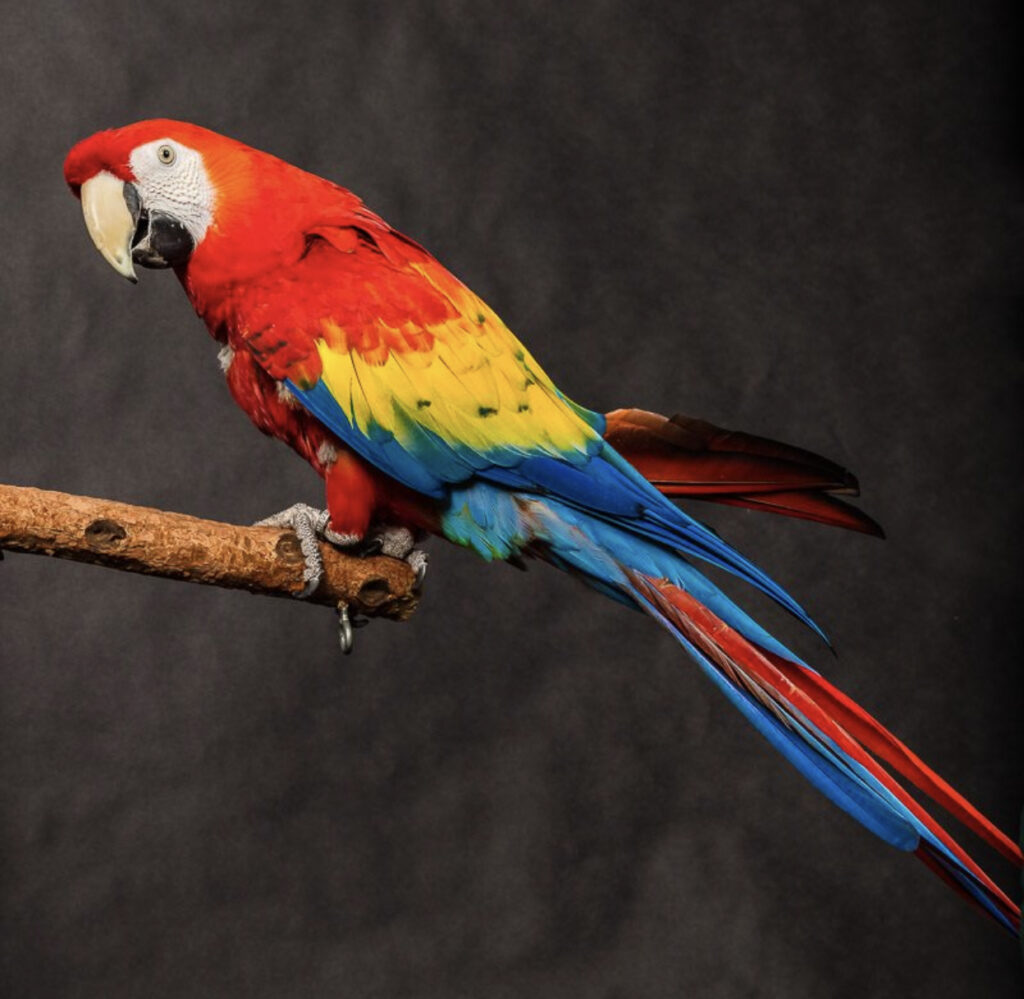
Lifespan
A long multi-decade commitment
Size
Very large parrot
Noise Level
High
Experience Level
Best for experienced or extensively prepared owners
About the Scarlet Macaw
Scarlet Macaws can be curious, active, and highly engaging. They may also be more intense or independent than some prospective owners expect, making patient training and realistic expectations essential.
Early training should emphasize calm step-ups, stationing, safe play, cooperative handling, and respect for body language. Socialization should be positive rather than forced.
Their large beak is a normal tool for climbing, exploring, and manipulating objects. Owners must understand beak behavior and provide safe, appropriate outlets for chewing and destruction.
Diet & Nutrition
- Base the diet on a reputable formulated food for large parrots, adjusted with veterinary guidance.
- Offer fresh bird-safe vegetables and limited fruit.
- Use nuts and other high-value foods as measured training rewards and foraging items.
- Keep food and water containers clean and remove perishable foods promptly.
- Monitor weight and body condition with an avian veterinarian.
Housing & Safety
- Provide a very large, robust cage and play stand designed for macaw strength.
- Ensure the long tail cannot drag or strike the cage floor and that toys do not eliminate movement space.
- Offer supervised exercise in a carefully bird-proofed area.
- Use secure locks and inspect cage welds, chains, and connectors regularly.
- Keep the bird away from kitchen fumes, smoke, open flames, unsafe metals, and toxic household products.
Enrichment, Exercise & Training
- Provide heavy-duty chew toys, foraging projects, climbing structures, and frequent training opportunities.
- Teach independent activity and avoid reinforcing constant screaming for attention.
- Include bathing, safe natural light exposure, and a dependable sleep schedule.
- Observe body language closely to reduce overstimulation and prevent bites.
- Use positive reinforcement and calm, consistent boundaries.
Is a Scarlet Macaw Right for You?
A Scarlet Macaw is appropriate only for a household prepared for exceptional noise, size, expense, destruction, training needs, and decades of responsibility.
It may not be a good fit for homes with limited space, strict noise restrictions, fragile furnishings, or insufficient time for daily interaction, supervision, and training.
Recommended Products
Popular products from the Parrots & Company online store.







Frequently Asked Questions
Are Scarlet Macaws loud?
Yes. They can produce extremely powerful calls and are not appropriate for households with strict noise limitations.
Can Scarlet Macaws talk?
Some learn words and phrases, but speech varies by individual and should never be guaranteed.
Are Scarlet Macaws affectionate?
Some are affectionate and highly social, while others are more independent or intense. Temperament depends on the individual bird, socialization, and handling history.
How much space do they need?
They require a very large, strong cage, a substantial play stand, and frequent supervised exercise in a safe area.
What should a Scarlet Macaw eat?
A balanced formulated large-parrot diet is generally used as the foundation, along with bird-safe vegetables, smaller portions of fruit, and measured nuts or seeds.
Interested in a Scarlet Macaw?
Contact Parrots & Company for current availability, individual bird information, and help preparing the right home.
This page provides general educational information and is not a substitute for individualized advice from an avian veterinarian. Species tendencies do not predict every individual bird.